Introduction
As we navigate through 2026, the financial sector faces an escalating challenge from a sophisticated form of cybercrime known as ATM jackpotting. This technique, which manipulates automated teller machines (ATMs) to dispense large amounts of cash uncontrollably—much like hitting a jackpot on a slot machine—has transitioned from a niche threat to a mainstream concern. First gaining notoriety in regions like Europe and Latin America, jackpotting has now firmly entrenched itself in the United States, with a dramatic spike in incidents reported in 2025 that continues unabated into 2026.
According to industry reports, jackpotting accounted for a staggering 74% of ATM attacks in 2025, a trend that experts predict will intensify this year due to evolving criminal tactics and vulnerabilities in aging ATM infrastructure. The U.S. Department of Justice (DOJ) recently made headlines by indicting 54 individuals in December 2025 for a multi-million-dollar scheme involving Ploutus malware, highlighting the organized, transnational nature of these operations. Linked to groups like the Venezuelan criminal syndicate Tren de Aragua, these attacks have resulted in over $40 million in losses since 2021, with at least 1,529 incidents recorded in the U.S. alone.
In this comprehensive article, we’ll explore what ATM jackpotting entails, its historical evolution, the technical mechanics behind it, recent high-profile cases in 2026, the broader impacts on financial institutions and consumers, and actionable prevention strategies. By understanding this threat, banks, credit unions, and individuals can better fortify themselves against what has become a lucrative enterprise for cybercriminals. As technology advances, so do the risks—making 2026 a pivotal year for reevaluating ATM security protocols.
What is ATM Jackpotting?
ATM jackpotting is a hybrid cyber-physical attack that combines digital hacking with physical tampering to exploit ATM vulnerabilities. Unlike traditional skimming, which steals card data for fraudulent transactions, jackpotting directly targets the machine’s cash dispensing mechanism. Criminals force the ATM to eject bills—often up to 40 notes every 30 seconds—without any legitimate transaction or account linkage. This results in immediate, high-value thefts, sometimes exceeding $100,000 from a single machine.
The term “jackpotting” evokes the image of a malfunctioning slot machine pouring out winnings, but in reality, it’s a meticulously planned operation. Attackers typically work in teams: one group gains physical access to the ATM (often posing as technicians), installs malware or hardware devices, and then remotely triggers the cashout. This method bypasses user authentication entirely, making it particularly insidious as it doesn’t directly impact individual account holders but drains the financial institution’s reserves.
In 2026, jackpotting has evolved beyond simple malware injections. Criminals now exploit unencrypted hard drives, PCIe ports, and even direct memory access (DMA) attacks, which allow them to bypass security software by directly interfacing with the ATM’s memory. Windows-based ATMs from manufacturers like Hyosung, Diebold, and NCR are especially vulnerable due to outdated operating systems and insufficient encryption. Front-access units in lobbies or drive-throughs are prime targets, as they offer easier physical entry compared to through-the-wall installations.
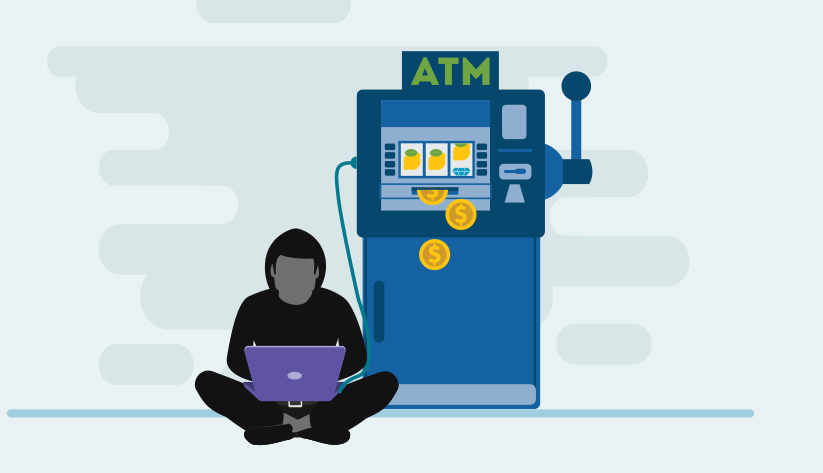
This illustration depicts a common jackpotting scenario: a hacker connecting a laptop directly to an ATM’s internals to install malware, highlighting the blend of physical and digital intrusion.
Buy ATM SKIMMERS From CVV Dump Shop Click Here
Historical Evolution of ATM Jackpotting
The roots of ATM jackpotting trace back to the early 2010s in Mexico and Eastern Europe, where malware like Ploutus first emerged. Ploutus, a modular malware family, allowed attackers to control ATMs remotely via SMS or custom interfaces, marking a shift from brute-force physical attacks to more elegant, software-driven exploits.
In the U.S., jackpotting was relatively rare until 2018, when the first major incidents were reported. The U.S. Secret Service issued warnings about coordinated attacks, often involving international syndicates. By 2025, however, fraud overtook physical attacks as the dominant ATM crime, with jackpotting comprising 72% of incidents according to the ATM Industry Association (ATMIA). This surge is attributed to several factors: the migration to EMV chip cards reduced skimming effectiveness, pushing criminals toward direct machine hacks; the proliferation of off-site ATMs in convenience stores and gas stations provided more accessible targets; and the rise of organized crime groups leveraging dark web tools.
Entering 2026, the landscape has darkened further. The ATMIA’s Crisis & Crime Management Intelligence System (CCMIS) reported over 51,000 global ATM crimes by late 2025, with U.S. jackpotting cases accelerating due to “complacency” among financial institutions. Malware variants like Ploutus have been refined, incorporating obfuscation techniques to evade detection, as seen in recent deobfuscation analyses by cybersecurity firms. Additionally, the involvement of terrorist-designated organizations like Tren de Aragua has elevated jackpotting from mere theft to a national security concern, with proceeds funding broader criminal activities.
Recent Cases and Trends in 2026
2026 has already seen a continuation of the jackpotting wave that peaked in 2025. In January alone, industry podcasts and reports highlighted a resurgence driven by unpatched vulnerabilities. One notable case involves a multi-state ring busted in Georgia, where criminals used detailed ATM reconnaissance to install malware, leading to coordinated cashouts across several states.
The landmark DOJ indictment in December 2025, unsealed in early 2026, charged 54 individuals—many linked to Tren de Aragua—with executing or attempting 63 jackpotting incidents between 2024 and 2025. This scheme netted at least $5.4 million, with failed attempts targeting another $1.4 million, primarily from credit union ATMs. Prosecutors detailed how the group used Ploutus variants to remotely control machines after initial physical breaches, often in Nebraska and surrounding areas. Similar operations have hit the Wyobraska region, with teams of two or three operatives opening ATMs to install malware.
In Michigan, federal authorities charged two men in a “sophisticated” jackpotting scheme where they hacked ATMs to dispense unlimited cash, stealing over $120,000 by tricking machines into displaying “closed” status before returning to collect. These cases underscore a trend: jackpotting is no longer opportunistic but highly organized, with criminals scouting locations, using insider knowledge, and laundering funds through international networks.

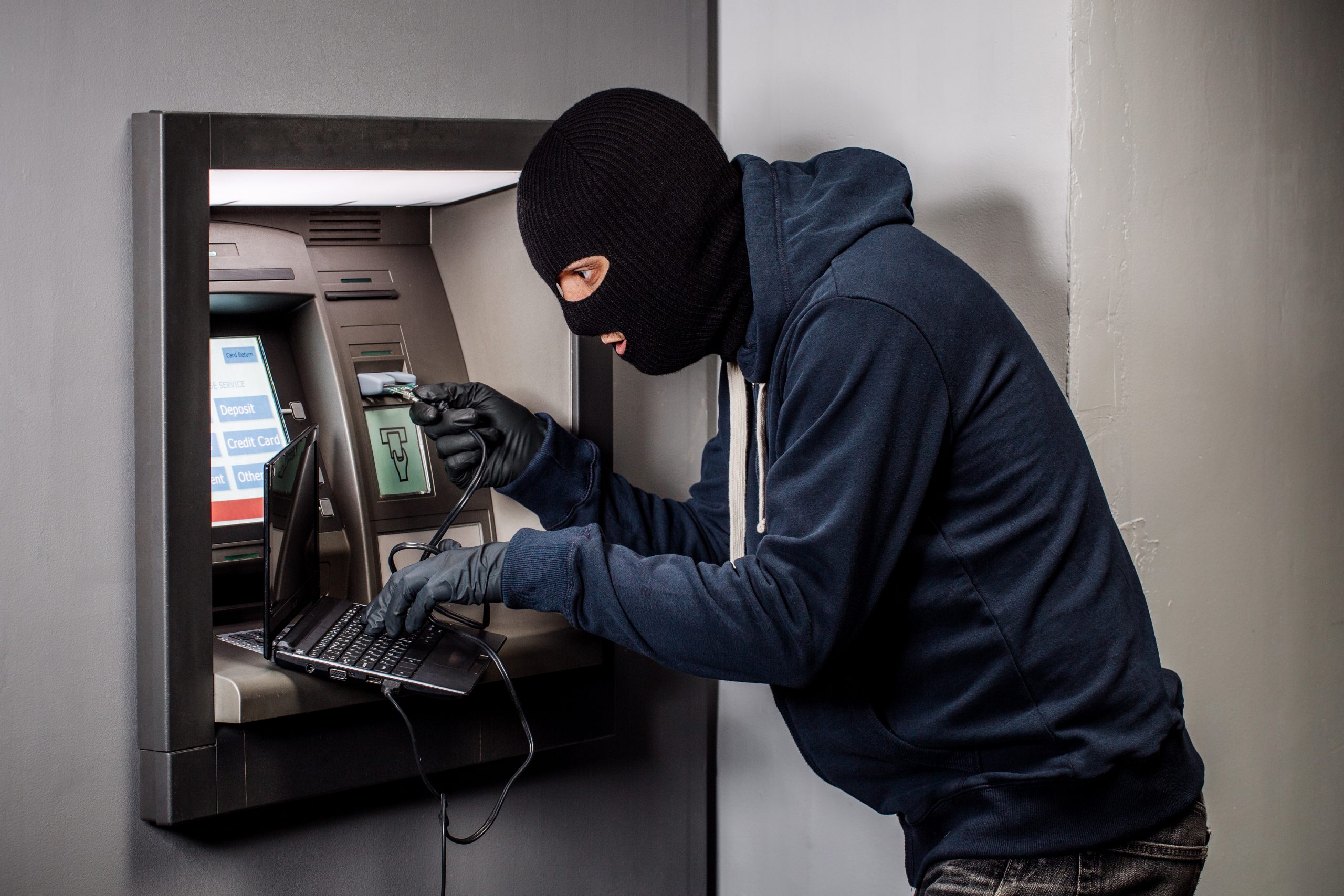
This image captures hackers in action, preparing for an ATM cash heist, illustrating the preparatory phase common in 2026 jackpotting operations.
Experts forecast that 2026 will see jackpotting integrate with emerging technologies, such as AI-driven reconnaissance or IoT exploits in networked ATMs. Physical attacks, like using blowtorches or vehicles to rip open machines, may combine with digital methods for hybrid assaults.
How ATM Jackpotting Works: A Step-by-Step Breakdown
Understanding the mechanics of jackpotting is crucial for prevention. Here’s a detailed, step-by-step explanation:
- Reconnaissance and Targeting: Criminals identify vulnerable ATMs through online forums, insider tips, or physical scouting. They prefer machines with weak locks, outdated software (e.g., Windows XP or 7), or exposed ports.
- Physical Access: Posing as service technicians, attackers use master keys, drills, or crowbars to open the ATM cabinet. This step takes minutes and often occurs at night.
- Malware Installation: Once inside, they connect a device (like a laptop or “black box”) to the ATM’s USB, PCIe, or serial ports. Malware such as Ploutus is uploaded, which overrides the dispenser controls. Ploutus variants allow remote activation via phone or network commands.
- Remote Triggering: The ATM is set to display an “out of service” message. Later, a “mule” approaches while a remote operator instructs the machine to dispense cash. This can empty the cassette in under 10 minutes.
- Extraction and Escape: Cash is collected quickly, often in bags, and the team flees. Malware may self-delete to erase traces.
Advanced variants use DMA attacks to access memory directly, bypassing antivirus software. Tools like rogue keyboards or network sniffers enhance control.

This visual represents the technical side of Ploutus malware deployment, showing how obfuscated code is used in ATM hacks.
Impacts on Banks, Credit Unions, and Consumers
The repercussions of jackpotting extend far beyond immediate financial losses. For banks and credit unions, a single attack can result in $50,000 to $200,000 in stolen cash, plus repair costs and downtime. In 2025, U.S. losses from jackpotting exceeded $40 million, straining insurance premiums and operational budgets. Credit unions, often with fewer resources, face amplified risks, as jackpotting erodes member trust and invites regulatory scrutiny.
Consumers, while not directly debited, suffer indirectly through service disruptions, higher fees to offset losses, and eroded confidence in banking infrastructure. In severe cases, like those tied to terrorist funding, jackpotting poses broader societal risks by supporting organized crime.
On a macroeconomic scale, these attacks highlight vulnerabilities in the cash economy, accelerating the push toward digital payments but leaving legacy systems exposed.
Get Cloned Cards with balance From CVV Dump Shop Click Here
Prevention Measures: Safeguarding ATMs in 2026
Preventing jackpotting requires a layered, proactive approach. Here’s actionable guidance:
- Physical Security Enhancements: Install reinforced cabinets, alarm systems, and surveillance cameras with AI anomaly detection. Limit access with biometric locks and regular key changes.
- Software and Network Hardening: Upgrade to Windows 10 or later with full-disk encryption. Implement whitelisting to block unauthorized software, and segment ATM networks from the internet. Regular patching is essential.
- Monitoring and Response: Use real-time monitoring tools for unusual activity, like unexpected dispenser commands. Partner with law enforcement, such as the U.S. Secret Service, for threat intelligence.
- Employee Training: Train staff to verify technician credentials and report suspicious behavior. Conduct regular audits of ATM logs.
- Advanced Technologies: Deploy endpoint detection and response (EDR) systems, and consider migrating to contactless or app-based withdrawals to reduce reliance on physical ATMs.
Credit unions can collaborate through associations like GoWest for shared resources. Insurance policies should cover jackpotting explicitly, with incentives for compliance.
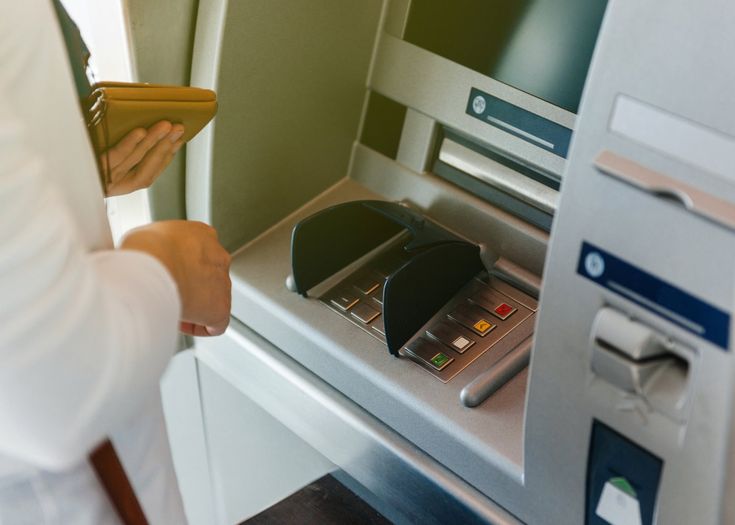
This image showcases essential ATM security features, including cameras and reinforced designs, vital for preventing jackpotting in 2026.
Future Trends and Ethical Considerations
Looking ahead in 2026 and beyond, jackpotting may incorporate AI for automated targeting or blockchain for laundering proceeds. Quantum computing could crack encryptions, necessitating post-quantum upgrades.
Ethically, financial institutions must balance security with accessibility, ensuring measures don’t disenfranchise underserved communities reliant on cash. Legally, compliance with regulations like PCI DSS is non-negotiable, with potential fines for negligence.
In conclusion, ATM jackpotting in 2026 represents a critical intersection of technology and crime. By staying informed, investing in defenses, and fostering industry collaboration, we can mitigate this threat and secure the future of financial transactions. As cybercriminals evolve, so must our vigilance—turning potential jackpots into fortified vaults.